






Waterzuiveringstechnologieën vergeleken voor industriële toepassingen
Inhoud
- Challenges in industrial water treatment
- 1. Mechanical pretreatment: the first line of defense
- 2. Biological purification technologies: the power of microorganisms
- 3. Physico-chemical purification: precision technology
- 4. Filtration and adsorption techniques: the finishing touches
- Overview table: technologies compared
- Sustainability and innovation in water purification
- The role of concrete tanks in water purification
- Customization is essential
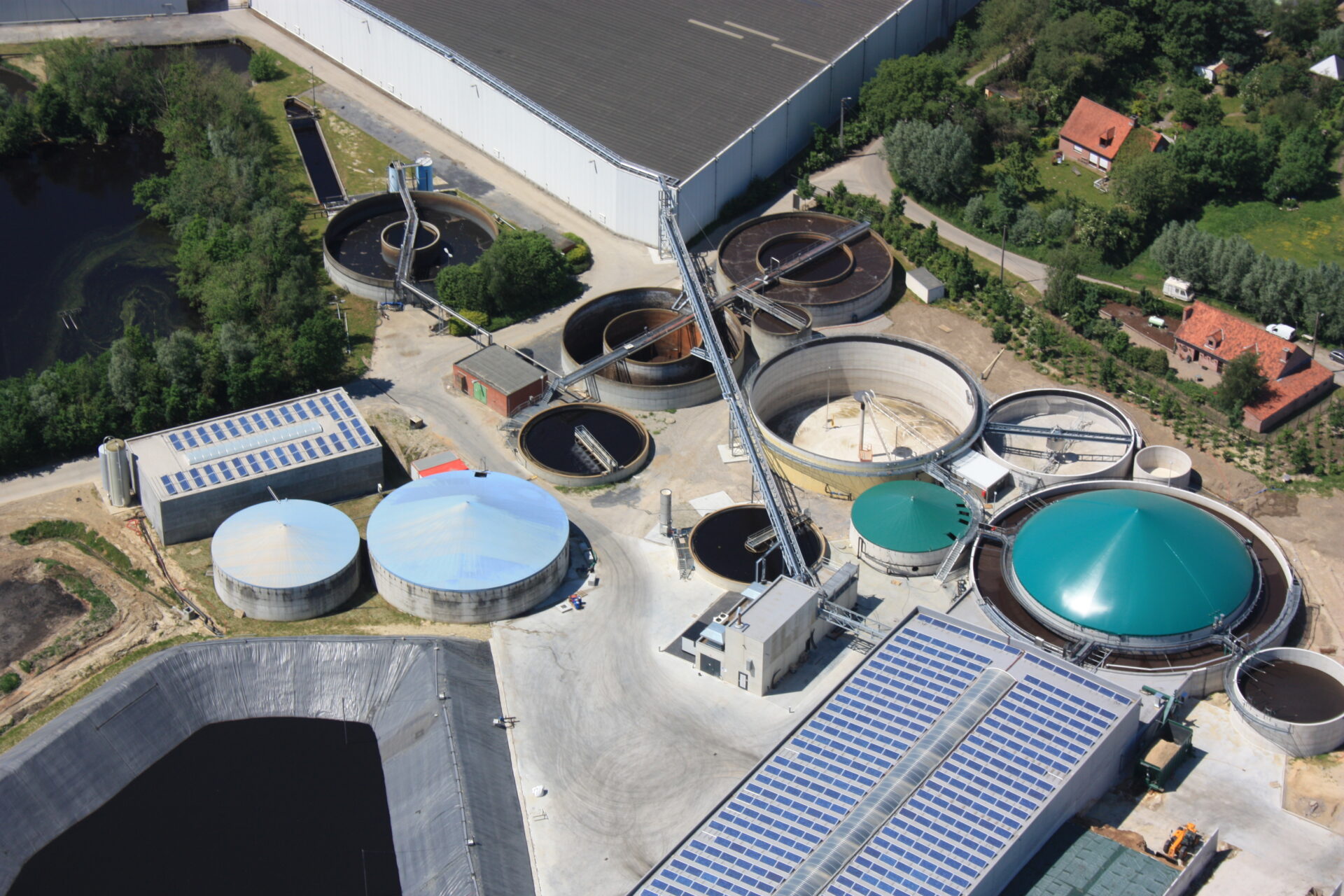
Water is an indispensable resource in virtually every industrial process. Whether for cooling, cleaning, or as part of the production process itself, industry is a major consumer of this precious raw material. With increasing environmental regulations, rising water costs, and growing public awareness, efficient water purification is becoming increasingly important for industrial players.
As specialists in the construction of concrete tanks for water treatment plants, we at Bio-Dynamics see the challenges companies face every day. Industrial wastewater varies significantly by sector, meaning there is no universal solution. In this blog, we compare the key water treatment technologies for industrial applications so that you can make an informed choice for your specific situation.
Challenges in industrial water treatment
Before we discuss the various technologies, it is important to understand which contaminants commonly occur in industrial wastewater:
- Organic substances – both biodegradable and persistent substances
- Heavy metals – such as lead, mercury, chromium and cadmium
- Fats, oils and greases (FOG) – mainly present in the food industry and metal sector
- Salts and nutrients – including nitrogen and phosphorus compounds
- Microplastics and synthetic chemicals – a growing problem in various sectors
The perfect purification technology depends on which of these substances are present in your wastewater, in what concentrations, and what the desired quality of the purified water should be. Let’s analyze the key technologies.
1. Mechanical pretreatment: the first line of defense
Every efficient wastewater treatment plant begins with mechanical pretreatment. This technique removes larger solids, sand, oil, and grease from the wastewater before it undergoes further treatment.
Applications and techniques:
- Sieves and grids – remove larger objects
- Flotation (DAF systems) – separation of light particles such as oils and greases
- Sand traps – catch sand and other heavy particles
- Oil separators – separating oils from water
Advantages:
- Simple, robust operation
- Relatively low costs
- Reduces the burden on follow-up treatments
- Protects pumps and equipment against damage
Disadvantages:
- Removes only coarse dirt
- No effect on dissolved substances or micropollutants
Application: Mechanical pretreatment is essential for all industrial wastewater treatment plants, regardless of the sector or type of wastewater.
2. Biological purification technologies: the power of microorganisms
Biological treatment uses microorganisms to break down dissolved organic pollutants. This technology is particularly cost-effective for wastewater containing biodegradable components.
2.1 Aerobic treatment
Traditional activated sludge vs. Nereda technology
Conventional aerobic treatment with activated sludge is a proven method, but is increasingly being replaced by innovative alternatives such as Nereda technology. This works with aerobic granular sludge, making the process more compact and energy-efficient.
Advantages:
- High purification efficiency, especially for organic substances
- Effective for the removal of nitrogen and phosphorus
- Nereda technology offers a smaller footprint and lower energy consumption
Disadvantages:
- Traditional systems require a lot of space
- Less efficient with toxic substances or extreme pH values
- Sensitive to temperature fluctuations
Application: Ideal for the food industry, beverage producers, the paper industry, and other sectors with biodegradable wastewater.
2.2 Anaerobic treatment
Anaerobic purification takes place without oxygen and produces biogas that can be used for energy generation.
Advantages:
- Produces biogas (energy recovery)
- Highly suitable for wastewater with a high organic load
- Lower sludge production than aerobic systems
Disadvantages:
- Longer startup time
- Less suitable for wastewater with low organic load
- Sensitive to toxic substances
Application: Excellent for the agro-industry, breweries, and food processing companies with high concentrations of organic material in the wastewater.
2.3 Membrane Bioreactors (MBR)
MBR technology combines biological purification with membrane filtration, resulting in very high water quality.
Advantages:
- Superior effluent quality
- Compact installation (up to 75% space saving)
- Enables water reuse
Disadvantages:
- Higher investment and maintenance costs
- Energy consumption for membrane aeration
- Periodic cleaning of membranes necessary
Application: Ideal for industries striving for water reuse, such as the chemical industry, food sector, and pharmaceutical industry.
3. Physico-chemical purification: precision technology
When biological purification is insufficient, or in the case of specific contaminants such as heavy metals, physico-chemical techniques offer a solution.
3.1 Coagulation and flocculation
This technique uses chemicals to cause small suspended particles to clump together, so that they can be removed more easily.
Advantages:
- Effective for the removal of suspended solids and phosphates
- Can remove heavy metals
- Relatively simple process
Disadvantages:
- Use of chemicals
- Production of chemical sludge
- Requires accurate dosing
Application: Suitable for the metal industry, textile industry, and other sectors with suspended particles or metals in the wastewater.
3.2 Advanced oxidation
With the help of ozone, UV radiation, or hydrogen peroxide, stubborn contaminants are broken down into harmless components.
Advantages:
- Breaks down even persistent organic matter
- Disinfects without the addition of chlorine
- No residues as with chemical treatment
Disadvantages:
- Higher investment
- Energy consumption
- Potential formation of by-products
Application: Pharmaceutical industry, chemical industry, and sectors with micropollutants or antibiotics in wastewater.
4. Filtration and adsorption techniques: the finishing touches
Advanced filtration and adsorption techniques are required to remove the smallest particles and dissolved substances.
Techniques:
- Sand filters – remove suspended particles
- Activated carbon – adsorbs organic substances and micropollutants
- Nanofiltration – filters dissolved substances and multivalent ions
- Reverse osmosis – produces ultra-pure water
Advantages:
- Very high water quality possible
- Can even remove submicron particles
- Enables full reuse
Disadvantages:
- High costs
- Pre-treatment necessary
- Production of concentrate as a residual stream
- Energy consumption (especially with reverse osmosis)
Application: Electronics industry, pharmaceutical sector, water reuse in virtually all industries.
Overview table: technologies compared
| Technology | Advantages | Disadvantages | Suitable applications |
|---|---|---|---|
| Mechanical pretreatment | Robust, simple, low costs | Removes only coarse dirt | All industries |
| Aerobic purification / Nereda | High efficiency, energy efficient | Less suitable for toxic substances | Food industry, versatile |
| Anaerobic purification | Produces biogas, suitable for high organic loads | Longer startup time | Agro-industry, food products, breweries |
| Membrane bioreactor | Very high water quality, compact | Higher investment, maintenance | Water reuse, food industry, chemical industry |
| Physico-chemical | Effective for metals and microcontaminants | Chemical usage, costs | Metal industry, chemicals, textiles |
| Reverse osmosis / filtration | Ultra-pure water, removes micro-contaminants | High pressure/energy, concentrate production | Water reuse, electronics, pharmaceuticals |
Sustainability and innovation in water purification
The future of industrial water treatment lies in sustainability and circular water use. Modern installations are increasingly integrating:
- Water reuse – recovering and reusing water in the production process
- Energy efficiency – minimizing energy consumption, for example through Nereda technology
- Heat recovery – recovering heat from wastewater
- Biogas production – energy generation from anaerobic purification
- Raw material recovery – recovering valuable components such as phosphorus
The role of concrete tanks in water purification
The infrastructure of water treatment plants is just as important as the purification technology itself. As a specialist in concrete tanks, Bio-Dynamics knows better than anyone that robust, durable structures are essential for effective water purification.
Concrete tanks offer significant advantages:
- Long service life – resistant to demanding conditions
- Flexible volumes – customization possible up to 50m diameter and 30m height
- Chemical resistance – resistance to aggressive substances in the influent
- Multifunctionality – suitable for various processes, from activated sludge to MBR
- Suitable for biogas capture – with gas-tight structures and roofs
Whether it concerns a secondary settling tank, aeration tank, buffer tank, or storage tank for treated water – the right infrastructure forms the backbone of every efficient water treatment plant.
Customization is essential
There is no universal solution for industrial water purification. The optimal technology depends on:
- The specific contaminants in your wastewater
- The desired quality of the effluent
- Available space and budget
- Your sustainability goals
- Possibilities for water reuse
The combination of suitable purification technology with high-quality infrastructure, such as Bio-Dynamics’ concrete tanks, provides a future-oriented and cost-effective solution for your water purification needs. As a family business with over 25 years of experience in the sector, we are happy to personally guide you from design to the completion of your installation.
Do you have questions about the most suitable water purification technology for your specific situation? Contact us for a no-obligation consultation.